
AC drain pan overflow and ceiling damage in Allen, TX
A tripped safety switch on your AC is usually the first sign a drain line backed up somewhere behind it.
Emergency Line(972) 544-433924/7 emergency line. Free estimates from local pros.
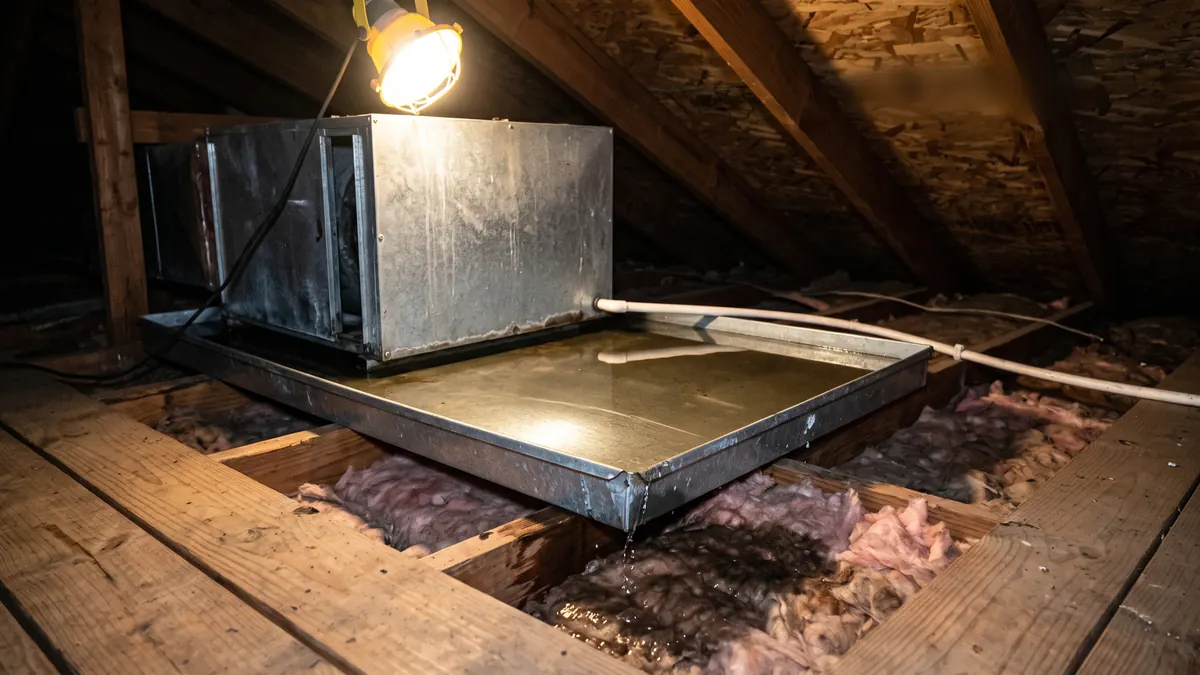
Your air conditioner shuts itself off, or won’t start back up, in the middle of a hot afternoon. Nine times out of ten, it isn’t broken. A float switch just did the job it was built for: it cut power the moment the drain pan underneath the unit filled up.
The switch that just tripped
A float switch sits in the condensate pan and does one thing: it stops the system before water rises high enough to spill over the side. When it trips, the AC going quiet isn’t a random glitch. It’s the system telling you the pan is at or near full, which only happens when water isn’t leaving through the drain line the way it’s supposed to.
What’s actually sitting in that pan
The pan exists to catch water dripping off the evaporator coil, a small, steady amount all day long while the unit runs. Under normal conditions, that water leaves through a thin drain line about as fast as it arrives. A full pan means the line isn’t keeping up, and the switch tripping is the last safeguard between a full pan and water finding its way past the edge.
The line that backed everything up
Algae likes that line. It’s a dark, damp tube that stays warm through the cooling season, and with dust for food a film builds along the inside wall a little at a time. Given enough time, that film narrows the line until water can’t get through fast enough, and the pan starts filling faster than it drains. This is the most common reason a switch trips at all.
The coil making the water in the first place
None of this happens without the coil. Cooling humid indoor air causes moisture in that air to collect on the coil’s surface, the same basic process that fogs up a cold glass, and that water has to go somewhere. Texas air conditioners run long stretches from spring into fall, so a coil here spends most of the year producing a steady trickle for that line to carry away.
Where the water goes once nothing stops it
If the switch is missing, worn out, or wired wrong, an overflowing pan doesn’t just sit there. Water spreads across the attic floor and into the insulation around the air handler before it ever reaches a spot thin enough to soak through the drywall below. The stain in the room underneath is the last stop on that route; insulation and decking soaked first. For what a stalled overflow looks like once it reaches the room below, see ceiling water damage.
A cup of vinegar keeps the line open
A cup of plain white vinegar poured down the condensate line every few months breaks up the algae film before it turns into a real clog. It’s a five-minute habit, not a repair, and it doesn’t replace having a technician check the switch and the pan during a normal service visit.
What this looks like to an insurer
A float switch that fails out of nowhere usually reads as an accident to an insurer. A pan that overflowed slowly, month after month, because nobody flushed the line, raises a different question about neglect. Either way, your specific policy decides that call, and the homeowners insurance guide scores how insurers weigh sudden failures against ongoing neglect.
A tripped switch is doing you a favor
An AC that shuts itself off mid-afternoon feels like bad timing, but it’s the cheapest outcome of everything above. The alternative is a pan that keeps filling with nothing to stop it, which is how a clogged line turns into a full ceiling water damage repair instead of a service call. The switch tripping is the system working, not failing.
Common questions
Will resetting the switch make the AC run again safely?
Resetting it and running the unit before the pan and line are actually clear usually means the same shutoff happens again soon. An HVAC company can confirm the clog is cleared and the switch is working correctly before you rely on it again.
Does a clogged line always mean the whole system needs service?
Not necessarily. A single clog is often fixed with a flush of the line. Repeated overflows are worth having an HVAC technician look at, since a coil issue or a drain line with the wrong slope can cause the exact same symptom.
What if my unit doesn't have a float switch at all?
Some older installs were never fitted with one. If yours is missing that safety switch, an HVAC company can usually add one, and it's a cheap way to keep the next clog from turning into a ceiling problem.
Related pages
Drying Time
Drying time isn't one number. Three questions decide it every time.
Learn more →Frozen Pipe Burst
PEX plumbing lowers the odds of a freeze burst in Allen. It doesn't erase them.
Learn more →Homeowners insurance
The answer sits in your own policy, not in a rule of thumb.
Learn more →Mold After Water Damage
One wet wall tells the whole story, day by day.
Learn more →Talk to a local pro now
We answer 24/7. One call gets a Allen crew moving on your water damage, with a free estimate and help with your insurance claim.
Emergency Line(972) 544-4339Free estimates. No obligation to hire.